


|


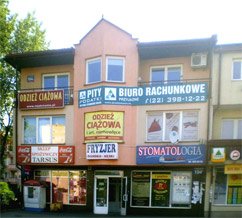


20% Rabatu - przez 3 miesiące za polecenie nas innemu klientowi.
Każdy polecający otrzyma 20% rabat liczony od wartości podpisanego kontraktu z nowym klientem
GRATIS - Założenie jednoosobowej Dzialalności Gospodarczej dla klientów, którzy podpiszą z nami umowę o obsługę księgową !!!


The Geometric Foundation of Realistic Graphics: From Theory to the Stadium of Riches
At the heart of every photorealistic digital environment lies a deep synergy between geometry and computation. In the realm of high-fidelity visuals, digital geometry forms the structural backbone enabling photorealistic rendering—transforming abstract mathematical constructs into lifelike stadium surfaces, fluid shadows, and dynamic materials. This fusion of form and function reveals how principles rooted in differential geometry, Boolean logic, and statistical convergence converge in real-world applications like the immersive world of the Stadium of Riches.
The Geometric Foundation of Photorealistic Rendering
Digital geometry is not merely a tool—it is the very language of photorealism. From polygonal meshes to volumetric fields, geometric models define every curve, corner, and shadow in a rendered scene. In complex visualizations such as the Stadium of Riches, precise geometric shaping ensures structural accuracy—tilted seating rows, arched roofs, and sweeping facades emerge from coordinate systems refined through computational geometry. Such models form the canvas upon which lighting and material responses are painted with mathematical precision.
Boolean logic serves as the binary engine driving pixel-level control. Binary operations—AND, OR, NOT—operate within the {0,1} space to shape pixel selection through masking and transparency logic. In stadium rendering, these operations determine which surfaces receive light, how shadows bleed through intersecting planes, and how glass or metal textures interact with reflections. Think of boolean masks as digital blueprints, carving forms from formless space with exactness—much like a sculptor’s chisel defining volume in marble.
Statistical convergence, grounded in the law of large numbers, underpins smooth gradient rendering and anti-aliasing. Ray tracing simulations leverage sample averaging to eliminate jagged edges, transforming jagged lines into seamless surfaces. This principle ensures that stadium lighting transitions from harsh to natural—critical for immersive realism. The Stadium of Riches exemplifies this: stochastic sampling replaces crude edges with fluid gradients, creating a believable visual depth.
Differential Geometry: Crafting Curved Realities
While polygons define structure, differential geometry breathes life into curved surfaces. Tools like Christoffel symbols Γᵢⱼᵏ model how basis vectors shift across non-flat manifolds, enabling accurate simulation of dynamic stadium elements—from the sweeping arcs of a roof to the tilted incline of tiered seating. These mathematical constructs capture subtle vector drifts that govern how light bends and reflects across surfaces, ensuring materials respond realistically under varying illumination.
Consider the curved facade of the Stadium of Riches: differential geometry allows rendering engines to compute how surface normals change across complex geometries, dictating how sunlight fractures or pools on textured concrete and reflective metals. Without this foundation, even the most detailed mesh would fail to convey true form under dynamic light conditions.
Case Study: Stadium of Riches—Where Theory Meets Immersion
The Stadium of Riches integrates Boolean masking to define structural geometry and transparency gradients with surgical precision. Binary masks isolate seating tiers and open-air zones, enabling layered visual effects and realistic material blending. Meanwhile, stochastic sampling—inspired by large numbers—smooths terrain elevations and light falloff, eliminating jagged artifacts and producing cinematic softness.
Curvature-based rendering further enhances realism: Christoffel symbols guide dynamic surface normals, ensuring materials respond authentically to environmental lighting—whether sunlight glints off a polished roof or shadow deepens under a cantilevered stand. These techniques merge abstract math with tangible visual experience, demonstrating geometry’s role as a universal language of perception.
„Geometry is not just measured in angles and curves—it is how we see, interpret, and remember space.”
Geometry as a Universal Language of Perception
Mathematical abstraction mirrors human visual interpretation, where patterns, symmetry, and curvature guide recognition and depth perception. In digital art, architecture, and immersive environments alike, geometric principles form a shared vocabulary that transcends medium. The Stadium of Riches proves this: its virtual design reflects timeless truths—light bends over curves, shadows stretch across planes, and form is revealed through mathematical precision.
Table: Key Geometric Principles in Real-Time Graphics
| Principle | Role in Visual Realism | Application in Stadium of Riches |
|---|---|---|
| Boolean Operations | Pixel selection, transparency, shadow logic | Binary masks for seating and transparency gradients |
| Differential Geometry | Modeling curved surfaces and vector shifts | Simulating arched roofs and dynamic facade normals |
| Large Numbers & Statistical Convergence | Smooth gradient rendering and anti-aliasing | Stochastic sampling eliminates jagged edges |
Conclusion: From Math to Mastery in Digital Worlds
The Stadium of Riches stands as a vivid testament to geometry’s power in shaping immersive digital realities. Through Boolean logic, differential curvature, and statistical convergence, abstract mathematical concepts translate into lifelike architecture, dynamic lighting, and seamless surfaces. These principles—though rooted in theory—are alive in every pixel of the virtual stadium, offering a tangible bridge between mathematical elegance and visual wonder.
Galeria
