


|


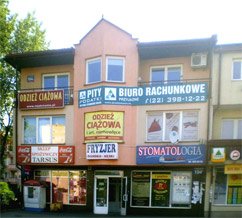


20% Rabatu - przez 3 miesiące za polecenie nas innemu klientowi.
Każdy polecający otrzyma 20% rabat liczony od wartości podpisanego kontraktu z nowym klientem
GRATIS - Założenie jednoosobowej Dzialalności Gospodarczej dla klientów, którzy podpiszą z nami umowę o obsługę księgową !!!


Quantum Logic and the Limits of What Can Be Computed
At the heart of computational theory lies a profound question: what can be computed, and what cannot? This exploration begins by examining the fundamental boundaries between classical determinism and quantum indeterminacy. While classical computation operates on clear, binary logic—where a bit is either 0 or 1—quantum logic introduces a richer framework where superposition allows qubits to exist in multiple states simultaneously. This shift redefines computation itself, opening doors to solving problems once deemed intractable.
The Nature of Computational Complexity
Classical computation is categorized by complexity classes such as P and NP. Problems in P can be solved efficiently by deterministic algorithms, while NP encompasses those for which a solution can be verified quickly—even if finding the solution may take exponentially longer. The long-standing P vs NP problem asks whether every problem whose solution is easy to verify is also easy to solve, a question that remains unresolved despite decades of research.
A striking example is integer factorization: breaking large numbers into primes. Classically, the best known algorithms—like the general number field sieve—run in sub-exponential time, making RSA encryption secure today. Yet, quantum logic introduces a radical departure through Shor’s algorithm, which solves factorization in polynomial time using quantum superposition and entanglement. This quantum advantage reveals not just speed, but a fundamental rethinking of computational limits.
Fractals, Chaos, and the Limits of Predictability
Computational intractability mirrors natural systems governed by chaos. The Lorenz attractor, a hallmark of deterministic chaos, exhibits a fractal dimension of approximately 2.06—non-integer and geometrically complex. This fractal structure illustrates how small changes in initial conditions amplify unpredictably, limiting long-term forecasting.
Such sensitivity echoes computational boundaries: even with perfect algorithms, certain systems resist prediction beyond short horizons. Fractal geometry thus provides a powerful metaphor—just as branching fractal patterns emerge from simple rules, computational complexity arises from layered decision-making, revealing deep connections between nature’s complexity and algorithmic limits.
Quantum Computing: Redefining Feasibility
Quantum computing leverages superposition and entanglement to explore multiple computational paths simultaneously. This quantum parallelism enables exponential speedups for specific tasks, such as matrix multiplication, achieved via the Coppersmith-Winograd algorithm. With asymptotic complexity O(n²·³⁷¹¹⁵²), it drastically outperforms classical methods, challenging the classical assumption that speed scales linearly with problem size.
These advances not only accelerate computation but redefine tractability. Problems previously confined to intractability—like large-scale optimization and cryptographic analysis—now enter feasible domains under quantum models, reshaping theoretical and practical boundaries.
The Happy Bamboo as a Metaphor for Computational Frontiers
In nature, the Happy Bamboo exemplifies constrained growth: its fractal branching adapts efficiently within environmental limits, balancing strength and resource use. This mirrors algorithmic trade-offs—between time, space, and accuracy—where optimal design requires harmonizing competing demands.
Just as bamboo grows under physical constraints, algorithms operate within computational boundaries shaped by physics and information theory. The bamboo’s resilience under pressure reflects how quantum systems exploit non-classical logic to transcend classical limits, suggesting that the next frontier of computation lies not just in speed, but in intelligent, adaptive design.
Beyond Speed: Non-Obvious Limits in Quantum Logic
Quantum logic introduces constraints absent in classical models. Entanglement enables non-local correlations that defy classical causality, violating Bell inequalities and undermining local hidden variable theories. Meanwhile, the no-cloning theorem prohibits perfect copying of unknown quantum states, restricting information extraction and enforcing fundamental security principles.
These features define new layers of computational boundaries—beyond mere time complexity—where information, causality, and physical law jointly shape what is possible. They remind us that computation is not just a mathematical game, but a physical process deeply entwined with nature’s limits.
Conclusion: Toward a Deeper Understanding of Computation’s Edge
Integrating chaos theory, quantum mechanics, and algorithmic innovation reveals a richer picture of computation’s frontiers. The Happy Bamboo, standing tall through fractal resilience and balanced growth, serves as a living metaphor: natural systems and quantum machines alike operate within elegant, constrained frameworks—where complexity emerges not from noise, but from disciplined interaction with fundamental laws.
Future directions point toward hybrid quantum-classical systems, where classical logic complements quantum parallelism, and toward ethical boundaries that respect computation’s natural and societal limits. As we push forward, understanding these deep constraints ensures progress remains grounded in reality.
| Key Concept | Classical Complexity Classes | P, NP, unresolved P vs NP | Quantum advantage via Shor’s algorithm |
|---|---|---|---|
| Exponential Barriers | Factoring large integers: classical sub-exponential time | Quantum polynomial-time factorization | Impact on cryptography and security |
| Computational Limits | Deterministic vs probabilistic models | Sensitivity to initial conditions in chaos | Non-clonability and non-locality in quantum states |
| Future Directions | Hybrid quantum-classical systems | Ethical computational boundaries | Integration of fractal and chaotic principles |
“The limits of computation are not just mathematical—they are physical, rooted in the structure of nature itself.”
— Inspired by quantum foundations and natural systems
Galeria
