


|


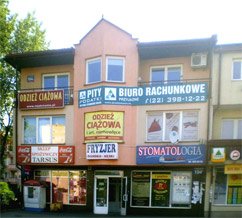


20% Rabatu - przez 3 miesiące za polecenie nas innemu klientowi.
Każdy polecający otrzyma 20% rabat liczony od wartości podpisanego kontraktu z nowym klientem
GRATIS - Założenie jednoosobowej Dzialalności Gospodarczej dla klientów, którzy podpiszą z nami umowę o obsługę księgową !!!


How Historical Tools Shape Modern City Planning 2025
City planning is an evolving discipline that seamlessly blends tradition with innovation. Throughout history, planners have relied on a variety of tools—ranging from simple maps to complex mathematical models—that continue to influence how we design urban environments today. Recognizing the roots of these methods not only deepens our understanding but also opens pathways for creative and sustainable urban development. An illustrative example of this integration is „My Sweet Town”, a modern city that exemplifies the application of timeless planning principles.
Table of Contents
- The Evolution of Planning Tools: From Ancient Methods to Contemporary Techniques
- The Mathematical Foundations of City Layouts
- The Role of Natural Materials and Processes in Planning and Design
- Applying Historical Tools in Modern Urban Planning: The Case of „My Sweet Town”
- Non-Obvious Perspectives: Cultural and Technological Influences
- Deepening the Understanding: The Interplay of Art, Science, and Utility in City Planning
- Conclusion: Lessons from the Past for Future Cityscapes
The Evolution of Planning Tools: From Ancient Methods to Contemporary Techniques
City planning has ancient origins, with early civilizations employing basic tools to organize urban space. Ancient Egyptians used simple maps and rudimentary grid patterns to lay out their cities along the Nile, emphasizing functionality and resource management. Similarly, Greek city-states like Athens employed orthogonal grids, which allowed for efficient navigation and land division. These foundational techniques established a blueprint for future planning practices.
By the 16th century, the adoption of isometric projection revolutionized blueprinting. This technique, originating from Renaissance art and mathematics, allowed planners to create accurate, scaled representations of complex structures, facilitating better visualization and coordination. These historical tools—maps, grids, and projections—laid the groundwork for the sophisticated urban planning methods we use today, including digital simulations and GIS technologies.
The Mathematical Foundations of City Layouts
Mathematics plays a crucial role in organizing urban spaces efficiently. Grid patterns, for example, are based on simple geometric principles that optimize land use and facilitate transportation. The rectangular and orthogonal grid, historically used in cities like Manhattan, exemplifies the application of mathematical precision to urban design.
Mathematical principles such as symmetry, scaling, and triangulation underpin many modern planning algorithms. These principles help planners create scalable, adaptable, and navigable cities. For instance, case studies reveal how grid-based layouts improve emergency response times and support sustainable growth, illustrating the enduring importance of mathematical foundations in urban planning.
| City Layout Type | Mathematical Basis | Example |
|---|---|---|
| Grid Pattern | Rectangular, based on Cartesian coordinates | New York City |
| Radial Plan | Circular symmetry, angular measurements | Paris (Place Charles de Gaulle) |
The Role of Natural Materials and Processes in Planning and Design
Nature provides inspiring models for sustainable urban development. Consider how sugar crystals naturally form into rock candy—a process driven by molecular interactions and environmental conditions. Similarly, natural patterns such as river meanders, fractal branching, and cellular structures influence ecological and architectural designs.
In modern planning, these natural processes guide sustainable practices. For example, green infrastructure harnesses natural water flow and vegetation patterns to reduce urban flooding and improve air quality. Incorporating natural patterns—like the fractal geometry of coastlines—can enhance aesthetic appeal and ecological resilience in urban spaces.
Applying Historical Tools in Modern Urban Planning: The Case of „My Sweet Town”
„My Sweet Town” exemplifies how traditional planning tools continue to inform modern urban design. The town’s layout relies heavily on the classic grid system, echoing ancient and Renaissance practices, which facilitates navigation, zoning, and infrastructure deployment.
Moreover, digital adaptations of isometric projection allow planners to visualize complex structures with clarity, ensuring that historical accuracy is maintained while embracing technological advancements. These tools help create a city that is both functional and evocative of timeless planning principles.
Benefits of applying these methods include ease of development, clarity in communication, and a cultural connection to traditional urban forms. However, limitations such as inflexibility to modern density demands highlight the need for adaptive strategies that blend old and new.
Non-Obvious Perspectives: Cultural and Technological Influences
Cultural context has historically shaped the selection and adaptation of planning tools. For instance, grid layouts are prevalent in Western cities, reflecting Enlightenment ideals of order and rationality. Conversely, Eastern cities often feature organic, flowing street patterns influenced by cultural aesthetics and environmental factors.
Technological advancements—such as computer-aided design (CAD) and digital isometric projection—have expanded the possibilities for integrating historical methods with modern precision. Future trends point toward a hybrid approach, where traditional tools are enhanced by real-time data, AI-driven simulations, and virtual reality, enabling planners to craft smarter, more adaptable cities.
Deepening the Understanding: The Interplay of Art, Science, and Utility in City Planning
Artistic representations, such as isometric blueprints, serve as a bridge between aesthetic vision and practical function. These visuals allow stakeholders to perceive spatial relationships and aesthetic qualities alongside technical details. For example, the detailed blueprints of Renaissance architects combined artistic skill with scientific understanding of geometry and materials.
„Effective city planning is an art that requires scientific precision and utility-driven design, balancing beauty with function.”
Case studies, such as the integration of green corridors in urban centers, demonstrate how scientific principles of ecology and engineering are combined with artistic urban design to produce sustainable, livable environments.
Lessons from the Past for Future Cityscapes
Historical tools have proven their resilience and adaptability, continuing to influence modern city planning. From basic maps and grids to advanced digital projections, these methods are foundational to creating functional, aesthetic, and sustainable urban spaces.
Encouraging the innovative application of traditional techniques—such as the grid system or natural pattern modeling—in contemporary contexts fosters cities that respect their heritage while embracing technological progress. As exemplified by „My Sweet Town”, blending old and new results in urban environments that are both familiar and forward-looking.
„Understanding the tools of the past equips us to build cities that are resilient, beautiful, and sustainable for generations to come.”
Galeria
