


|


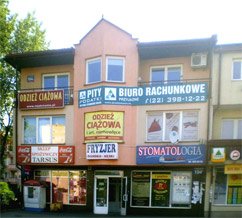


20% Rabatu - przez 3 miesiące za polecenie nas innemu klientowi.
Każdy polecający otrzyma 20% rabat liczony od wartości podpisanego kontraktu z nowym klientem
GRATIS - Założenie jednoosobowej Dzialalności Gospodarczej dla klientów, którzy podpiszą z nami umowę o obsługę księgową !!!


Fish Road: Where Geometry and Probability Shape Play
Fish Road is a vivid simulation where movement obeys precise mathematical laws, transforming abstract concepts into tangible play. At its core, it offers a dynamic playground where random walks, spatial probability, and dimensional geometry converge. This environment illustrates how seemingly simple paths encode deep principles of recurrence, diffusion, and asymptotic efficiency—skills essential not only in games but in real-world modeling of complex systems.
Probability in One and Three Dimensions: Return vs. Drift
In one-dimensional space, a random walk—where movement is constrained to left or right—exhibits a striking property: it will return to its starting point with certainty, a result known as the recurrence theorem. This contrasts sharply with three-dimensional motion, where the probability of returning to the origin drops to approximately 34%.
This difference arises from spatial volume expansion: in 3D, the available space grows rapidly, diluting the likelihood of re-encountering the origin. Mathematically, this mirrors Fick’s second law of diffusion, where particle spread increases with distance and time, reducing return probability.
| Dimension | Return Probability |
|---|---|
| 1D | 1 (certain) |
| 3D | 0.34 (34%) |
“In three dimensions, the path disperses so widely that the chance of retracing steps diminishes—proof that space governs probability.”
Fish Road brings this principle to life: each step a probabilistic choice, spatial constraints shape whether the walk converges or drifts endlessly.
Asymptotic Efficiency: O(n log n) and Algorithmic Parallels
Sorting algorithms like mergesort and quicksort achieve optimal average-case complexity of O(n log n), a benchmark in computational efficiency. Their success hinges on structured partitioning—dividing data recursively and merging efficiently.
Just as these algorithms balance randomness and order, Fish Road exemplifies how structured exploration accelerates convergence in high-dimensional spaces. Randomness guides direction, while geometric partitioning ensures progress—mirroring the trade-off between exploration and exploitation in optimization.
- MergeSort divides input until single elements, then merges recursively
- Quicksort partitions around pivots, ideally reducing depth logarithmically
- Both rely on probabilistic balancing to avoid worst-case O(n²) behavior
Fish Road’s pathfinding reflects this: randomness enables broad exploration, while spatial constraints—dimensionality and geometry—steer convergence toward efficient, low-probability return zones.
Diffusion as a Natural Process: Fick’s Law in Action
Diffusion governs how particles spread from high to low concentration, mathematically described by ∂c/∂t = D∇²c, where ‘c’ is concentration and ‘D’ is the diffusion coefficient. This process depends critically on spatial curvature and available volume.
In Fish Road, a particle’s trajectory simulates random diffusion—3D dispersion spreads faster than in 1D due to increased volume, reducing the chance of retracing steps. This echoes natural phenomena from cellular movement to pollutant spread in air or water.
“Where randomness meets space, diffusion unfolds—probability curvature dictates the path.”
By navigating Fish Road, users experience firsthand how geometry shapes stochastic diffusion, turning abstract equations into visible, interactive patterns.
Fish Road: A Dynamic Interface of Geometry and Probability
Fish Road is more than a game—it’s a living interface where mathematical laws shape play. Every turn is governed by recurrence, drift, and spatial bounds, offering intuitive insights into how probability evolves in constrained environments.
Visualize paths as stochastic trajectories: in 1D, walks oscillate tightly; in 3D, they meander widely, spreading across a volumetric space. These patterns mirror real-world diffusion and algorithmic search, revealing how geometry encodes physical and computational constraints.
Beyond Play: Real-World Applications and Deeper Connections
Fish Road’s principles extend far beyond recreation. In biology, it models animal migration patterns constrained by terrain and resource availability. In physics, it illustrates particle dynamics governed by stochastic forces. In technology, probabilistic models inspired by Fish Road improve AI path planning and reinforcement learning, where agents navigate uncertain environments efficiently.
Asymptotic behavior—such as the 34% return limit in 3D—reveals scalability boundaries in algorithms and systems, guiding engineers to design robust, efficient solutions that avoid worst-case degradation.
Table: Return Probabilities by Dimension
| Dimension | Return Probability |
|---|---|
| 1D | 1.0 |
| 2D | ~0.71 |
| 3D | 0.34 |
“Geometry is the silent architect of random paths—shaping chance in space and time.”
Fish Road transforms abstract mathematical truths into an accessible, engaging experience, proving that play and learning evolve together in the language of probability and space.
Galeria
