


|


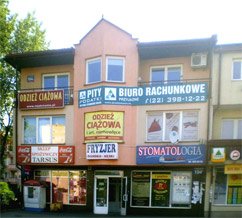

20% Rabatu - przez 3 miesiące za polecenie nas innemu klientowi.
Każdy polecający otrzyma 20% rabat liczony od wartości podpisanego kontraktu z nowym klientem
GRATIS - Założenie jednoosobowej Dzialalności Gospodarczej dla klientów, którzy podpiszą z nami umowę o obsługę księgową !!!


thecloakanddagger.co.uk
European Online Casinos: Licensing and Regulation, Player Safety Payouts, and The Key Differences Across Europe (18+)
European Online Casinos: Licensing and Regulation, Player Safety Payouts, and The Key Differences Across Europe (18+)
Attention: Gamers are typically 18and over within Europe (specific age/rules can vary per jurisdiction). This document is educational in nature. It doesn’t recommend casinos and does not promote gambling. It focuses on the legal realities, how to verify the legitimacy, consumer protection, and risk reduction.
Why „European casino sites” is a tangled keyword
„European internet-based casinos” could be a big market. It’s actually not.
Europe is a patchwork of gambling laws and frameworks across the nation. The EU regularly points on the problem of gambling via online is legal in EU countries is governed by numerous regulatory frameworks and questions regarding the cross-border nature of gambling usually come directly to national regulations and how they match with EU law and case law.
Thus, if a website claims it’s „licensed and regulated in Europe,” the key question is usually not „is the website European?” but:
Which regulator has granted it its licence?
Is it legal to be used by players in your destination country?
What player protections and payment rules are in effect under this rules?
This matters because the same company might behave differently depending on the market they have been licensed to operate for.
How European regulation usually works (the „models” are what you’ll encounter)
Around Europe You’ll often see the following models on the European market:
1) Ring-fenced national license (common)
A country requires operators to hold a licence from the local authorities when offering services to residents. Operators who are not licensed can be banned and fined, or restricted. Regulators often enforce rules regarding advertising and compliance requirements.
2) Frameworks with a mix or that are changing
Some markets are in transition: new laws, adjustments to advertising rules, restricting or expanding different categories of goods, updates to restrictions on deposit amounts, etc.
3.) „Hub” licensing is used by operators (with cautions)
Some operators hold licenses in jurisdictions which are extensively used for remote gaming in Europe (for instance, Malta). For example, the Malta Gaming Authority (MGA) specifies when the need for a B2C Gaming Service License is required for remote gaming service providers from Malta through the Maltese legal entity.
But the „hub” authorization does not necessarily guarantee that the operator is legal in all of Europe — the law in each country remains relevant.
The fundamental idea is that the license isn’t only a marketing symbol — it’s an objective for verification
A legitimate operator must offer:
The name of the regulator
a licence number / reference
the company’s name as a licensed entity (company)
the granted domain(s) (important: license may apply to particular domains)
And you should be able to verify this information with official regulator resources.
If a website displays an unspecific „licensed” logo without a regulator’s name and without a licence referent, treat it as a red flag.
Key European regulators and what their rules mean (examples)
Below are a few examples of widely-known regulators, and why people are interested in them. This is not a listing the context is the things you’re likely to see.
United Kingdom: UK Gambling Commission (UKGC)
The UKGC publishes „Remote gambling and software technical standards (RTS)” — security and technical standards required for licensed remote gamblers as well as gambling software providers. The UKGC RTS page shows it is in active maintenance and lists „Last updated on the 29th of January in 2026.”
The UKGC also has a webpage explaining future RTS changes.
Practical meaning on the part of customers: UK permits tend to be accompanied by clear technical and security specifications and a structured compliance oversight (though specifics depend on product and the service provider).
Malta: Malta Gaming Authority (MGA)
The MGA informs that a B2C Gaming Service Licence is required if a Maltese or EU/EEA entity offers a gaming service „from Malta” to a Maltese individual or via a Maltese official entity.
Meaning of consumers „MGA licensed” is a valid claim (when legitimate) however it does not automatically determine if the operating company is licensed to serve your country.
Sweden: Spelinspektionen (Swedish Gambling Authority)
Spelinspektionen’s website highlights specific areas that include responsible gambling, unlawful gambling enforcement, as well as anti-money laundering expectations (including registration and identity verification).
Practical significance for consumers: If a service has a focus on Swedish clients, Swedish licensing is typically the main indicator of complianceas is the fact that Sweden publically emphasizes responsible gambling and AML control.
France: ANJ (Autorite Nationale des Jeux)
ANJ describes its role to protect players, by ensuring that authorized operators follow their obligations and combating illicit websites and laundering.
France also provides an excellent example of how „Europe” is not uniform. The trade press indicates that in France betting on sports online as well as lotteries and poker are legal in France, but online casino games are not (casino games remain tied to traditional venues).
Practical significance for consumers: A site being „European” does not necessarily mean that it’s a legal online casino option in all European country.
Netherlands: Kansspelautoriteit (KSA)
The Netherlands introduced a remote gambling licensing program through the Remote Gambling Act (often referenced as entering into force in 2021).
There is also information on licensing rule changes starting the 1st of January in 2026 (for applications).
Practical meaning For consumers laws in the country may be altered, and enforcement might be increased. It’s well worth making sure you are aware of the current guidelines for regulators in your region.
Spain: DGOJ (Direccion General de Ordenacion del Juego)
The online gambling in Spain is regulated by the Spanish Gambling Act (Law 13/2011) and is overseen by the DGOJ and the DGOJ, as is typically described in compliance overviews.
Spain also provides self-regulation for the industry, including a code of conduct for gambling conduct (Autocontrol) to show the rules of advertising that can exist nationally.
Practical meaning that consumers can understand: restriction on advertising and expectation of compliance vary greatly by country „allowed promotions” in one area, and may be illegal in a different.
A practical legitimacy checklist for
any
“European online casino” website
Consider this as a safety filter.
Identification and licensing
Regulator named (not simply „licensed with a license in Europe”)
Reference to licence/number along with legal entity name
The domain you’re currently on is included in the license (if the regulator publishes domain lists)
Transparency
The company’s information is clear, as are support channels, and the terms
Guidelines for deposits and withdrawals, as well as verification
Clear complaint process
Consumer protection signals
ID verification as well as age gates (timing varies, but real operators are able to use a process)
Limits on deposits, spending limits and time-out alternatives (availability varies based on the scheme)
Responsible gambling information
Hygiene and security
HTTPS, no weird redirects there is no „download our application” from random hyperlinks
You are not required to grant remote access to your device
It is not necessary to pay „verification cost” or to transfer funds into personal wallets/accounts
If a website falls short of two or more the above, then it’s considered high-risk.
The single most essential operational concept is KYC/AML „account matching”
In the world of regulated markets, you are likely to see checks and verifications driven by
age checks
Identity verification (KYC)
anti-money-laundering (AML)
Swedish regulators like Spelinspektionen explicitly mention identity verification and AML as part of their areas of concern.
What does this mean in plain language (consumer’s):
Make sure to be aware that withdrawals might be subject to verification.
It is important to ensure that the payment method name/details should match that of your account.
Expect that large or unusual transactions may trigger additional scrutiny.
This isn’t „a casino that’s causing trouble” it’s a part of controlled financial controls.
Payments across Europe What’s typical as well as what’s more risky, and the best time is important to know
European pay-per-pay preferences vary greatly according to the country, but the primary categories of preference are the same:
Debit cards
Transfers to banks
E-wallets
Local bank methods (country-specific rails)
Mobile billing (often with low limits)
A neutral payment „risk/fuss” snapshot:
|
|
|
|
|
|
Debit card |
Fast |
Medium |
Bank blocks, confusion refunds or chargebacks |
|
Transfers to banks |
Slower |
Medium-High |
Processing delays, wrong details/reference issues |
|
E-wallet |
Fast-Medium |
Medium |
Account verification, fees for providers holds |
|
Mobile billing |
Fast (small quantities) |
High |
Conflicts and low limits can be complex |
This doesn’t mean you should use any technique, it’s an effective way of predicting where difficulties will occur.
Currency traps (very frequent in cross-border Europe)
If you deposit funds in one currency but your account runs in another, you may receive:
rates for conversion or spreads
The final numbers are a bit confusing,
or „double conversion” where multiple intermediaries are involved.
Safety rule: keep currency consistent when possible (e.g. EUR-EUR, GBP-GBP) and study the confirmation screen carefully.
„Europe-wide” legal reality: access across borders is not a guarantee
The most popular misconception is „If this is approved in an EU country, it’s guaranteed to be legal everywhere in the EU.”
EU institutions acknowledge that online gambling regulation is different across Member States, and the interaction with EU law is shaped by case law.
Practical lesson learned: legality is often determined by the country where the player is and if the operator has been legally authorised to conduct business in that.
This is why you can look up:
Certain countries permit certain online goods,
Other countries that restrict them,
and enforcement tools like blocking websites that aren’t licensed, or limiting advertising.
Scam patterns that occur in conjunction with „European internet-based casino” searches
Since „European on-line casino” refers to a wide term It’s a popular target for false claims. A common pattern of scams:
False „licence” claims
„Licensed to operate in Europe” without any regulator name
„Curacao/Anjouan/Offshore” claims presented as if they were European regulators
trademarks from regulators that don’t relate to verification
Fake customer service
„Support” only via Telegram/WhatsApp
personnel asking for OTP codes as well as passwords, remote access, or transfers to personal wallets
Retraction extortion
„Pay a fee in order to get your withdrawal”
„Pay Taxes first” in order to release funds
„Send the deposit to verify the account”
In the area of regulated consumer financial services „pay to get your money” is a well-known fraud signal. Treat it as high-risk.
Advertising and exposure for youth: reasons Europe is enforcing stricter rules
Over Europe Regulators and policymakers make sure they are aware of:
infringing advertising,
Youth exposure
aggressive incentive marketing.
For example, France has been reporting and debating issues around harmful marketing practices and illegal products (and not forgetting that certain merchandise are not legal in France).
The consumer’s takeaway is: if a site’s primary purpose of marketing is „fast spending,” luxury lifestyle imagery or techniques based on pressure, it’s a sign of riskregardless of where its claims that it’s a licensed site.
Country snapshots (high-level but not complete)
Below is a short „what is different by country” overview. Always read the current regulation guidelines for your country of residence.
UK (UKGC)
Strong security and technical standards (RTS) for remote operators
Ongoing RTS Updates and change of schedules
Practical: expect compliance that is structured and anticipate verification requirements.
Malta (MGA)
Structure for licensing remote gaming services as described by MGA
Practical: Common licensing hub. However, it does not outlaw the legality of player countries.
Sweden (Spelinspektionen)
Public emphasis on responsible and responsible gambling in the United States, enforcement of illegal gaming, The AML program and identification verification
Practical: If a site intends to target Sweden, Swedish licensing is essential.
Netherlands (KSA)
Remote Gambling Act enabling licensing is frequently cited in the regulatory summaries
License application rules to be changed since January 1st, 2026 have been made public
Practical: the framework is evolving and active oversight.
Spain (DGOJ)
Spanish Gambling Act and DGOJ oversight referenced in compliance summaries
Advertising codes exist and are country-specific
Practical: national compliance and advertising regulations can be very strict.
France (ANJ)
ANJ is a company that focuses on defending players and fighting illicit gambling
Online casino games are not generally legal in France; legal online offerings are narrower (sports betting/poker/lotteries)
Useful: „European casino” marketing could be misleading to French residents.
An „verify before you trust” walkthrough (safe practical, useful, and not promoting)
If you’d like to have a repeatable method for checking legitimacy
Find the legal entity that operates as the operator.
It should be included in the Terms and Conditions and footer.
Find the license reference and regulator license reference
The term „licensed” isn’t enough „licensed.” Seek out an official name for the regulator.
Check official sources
Utilize the official website of the regulator when you can (e.g., UKGC pages for standards; ANJ and Spelinspektionen provide an official list of institutions).
Verify the consistency of the domain
Scammers often use „look-alike” domains.
Read withdrawal/verification terms
You’re looking for clear rules that aren’t vague promises.
Do a scan for shady languages
„Pay fee to unlock the payment,” „instant VIP unlock,” „support only via Telegram” High-risk.
Privacy and protection of data in Europe (quick reality lookup)
Europe has robust data protection laws (GDPR) however, GDPR compliance isn’t a magic security seal. Unscrupulous websites can copy-paste the privacy guidelines.
What can you do?
avoid uploading sensitive information until you’ve verified the license and domain legitimacy,
Make sure to use strong passwords, and 2FA when available
Be on the lookout for phishing attempts with the phrase „verification.”
Responsible gambling This is also known as the „do not do harm” approach
Even when gambling is permitted, it could cause harm to some people. The majority of the markets that are controlled push:
limits (deposit/session),
time-outs,
self-exclusion mechanisms,
and more secure gaming messaging.
If you’re an under-18 the safest advice is quite simple: Don’t play -or share payment methods or identity documents with gambling sites.
FAQ (expanded)
Do we have a standard European-wide online casino license?
No. The EU acknowledges that gambling online regulations are different across Member States and shaped by legal precedents and national frameworks.
Does „MGA licensed” mean legitimate in each European member state?
Not at all. MGA describes licensing for offering gaming services from Malta However, legality for players’ countries can still differ.
What can I do to spot a fraudulent licence claim swiftly?
No regulation name + no license reference and no verified entity is high risk.
Why do withdrawals frequently require casino europe ID verification?
Because authorized operators must adhere to AML and identity verification requirements (regulators explicitly refer to these controls).
Is „European online casino” legal in France?
France’s regulated online offer is narrower; industry reporting notes that online casino games are not legal in France (sports betting/poker/lotteries are).
What’s your most frequent trans-border payment error?
Currency conversion creates confusion and also a misinterpretation of „deposit method as opposed to withdrawal method.”
Galeria
