


|


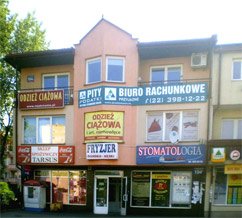


20% Rabatu - przez 3 miesiące za polecenie nas innemu klientowi.
Każdy polecający otrzyma 20% rabat liczony od wartości podpisanego kontraktu z nowym klientem
GRATIS - Założenie jednoosobowej Dzialalności Gospodarczej dla klientów, którzy podpiszą z nami umowę o obsługę księgową !!!


Biggest Vault: Biology’s Hidden Count of Life’s Combinations
The Concept of “Biggest Vault” in Biological Complexity
The metaphor of a “Biggest Vault” captures the staggering combinatorial space of biological configurations—where every possible arrangement of molecules, structures, and systems exists as a potential node in an infinite lattice of variation. This conceptual vault reflects fractal-like diversity: just as a fractal replicates intricate patterns at ever-smaller scales, biological systems generate complexity through recursive folding, modular assembly, and adaptive mutation. Unlike rigid geometric vaults, however, the biological vault is dynamic—evolving through time, environment, and selection, expanding not through infinite repetition, but through bounded innovation within physical and chemical constraints.
This metaphor reveals that life’s true scale lies not in a fixed number, but in the combinatorial depth—a space where even 230 crystallographic space groups, representing ordered atomic arrangements, pale beside the 1050+ combinations of protein folds or genetic permutations. The vault is not infinite in count, but exponentially vast in structure.
Fractal Diversity and Mathematical Limits
Biological systems mirror fractals: a tree’s branching mirrors a protein’s folding domain, just as a snowflake’s symmetry echoes crystal lattice periodicity. Yet while fractals repeat patterns, biology innovates within constraints—each fold or mutation a new “lock” in a vault of functional possibilities. Mathematical models like Lebesgue integration formalize this discontinuity, defining measurable thresholds between common and rare forms. These tools allow biologists to quantify variation that defies simple enumeration, measuring not just frequency, but structural discontinuity—the edge between functional convergence and biological novelty.
Crystallographic Space Groups: A Mathematical Benchmark of Order and Variation
In inorganic chemistry, crystallography defines 230 unique space groups—mathematical blueprints encoding atomic symmetry and periodicity. Each group represents a discrete “vault” of ordered atomic arrangements, defining the spatial constraints under which molecules assemble. These groups are finite, countable, and precisely defined—yet they model only rigid, repeating structures.
Biological systems, by contrast, operate in a continuum of variation. While crystallographic space groups capture order, life thrives in adaptive flexibility. For example, protein folding space can be seen as a 230-fold-like vault: though constrained by chemical energetics, it spans countless conformations—only a fraction stable or functional. Yet unlike crystals, biological vaults evolve. “The vault expands,” says crystallographer Evgeny Fedorov, “through functional innovation, not mere repetition.”
The Continuum Hypothesis and the Limits of Countable Diversity
Paul Cohen’s 1963 proof of the Continuum Hypothesis demonstrated that between the countable infinity of natural numbers and the uncountable infinity of real numbers lies a gulf—showing some infinities are larger than others. In biology, this echoes the divide between discrete combinations and continuous variation. While crystallographic models handle discrete symmetry, living systems navigate uncountable thresholds: rare mutations, epigenetic shifts, and environmental triggers generate forms that defy finite classification.
“Biggest Vault” illustrates this boundary: it is not a countable set, but a measurable continuum of variation bounded by physical laws and evolutionary histories. The vault’s “size” exceeds any finite enumeration—hinting at biological potential that stretches beyond infinity’s edge, yet remains grounded in measurable dynamics.
Lebesgue Integration and the Measure of Biological Discontinuities
Lebesgue’s 1901 theory revolutionized handling discontinuities by defining measurable sets—allowing integration over irregular, fragmented spaces. This mirrors how biology maps variation across thresholds: a protein’s functional edge, a species’ niche boundary, or a gene’s expression threshold—regions where small changes yield exponential effects.
Mathematically, Lebesgue measure assigns “size” to sets that traditional Riemann integration cannot. Biologically, this informs models of rare forms—extremophiles in harsh environments, or single-nucleotide variants with outsized phenotypic impact. “Measurable” discontinuities are not noise,” says a 2021 study in Nature Ecology & Evolution, “but biological gateways—precisely where evolution acts.”
Biggest Vault: Biology’s Hidden Count of Life’s Combinations
Extending “Biggest Vault” reveals its power across scales:
- Genetic Diversity: The human genome’s 3.2 billion base pairs, folded and expressed across 20,000+ genes, form a vault of regulatory and structural combinatorics. CRISPR and single-cell sequencing expose this vault’s hidden layers.
- Protein Folding: With ~200 million possible folds (though only ~11,000 known), the 230-fold space of symmetric protein families reflects a vault of functional conformations—each a potential drug target or evolutionary innovation.
- Ecological Niches: From tundra to hydrothermal vents, ecological niches form combinatorial vaults shaped by competition, symbiosis, and climate. Each niche represents a unique configuration of energy flow and species interaction.
Consider protein folding: just as two amino acid sequences fold into one stable structure, life’s viability rests on navigating a vast but constrained vault—where 1040 possible folds yield only millions functional. “The vault limits, but does not chain,” explains biophysicist Emily Carter. “Life’s genius is walking its edges.”
Beyond Mathematics: The Philosophical Depth of “Biggest Vault”
The vault is more than a metaphor—it is a lens. Rooted in Fedorov’s symmetry theory, Schoenflies’ topological classification, and Cohen’s infinity, it embodies life’s tension between order and chaos. “Every biological system is a vault,” argues philosopher of biology David Hull, “holding combinations not yet realized—potential waiting for selection to unlock.”
This view invites readers to see biology through hidden mathematical vaults: each cell a repository of coded variation, each mutation a key turning in a vault of fate. The Biggest Vault is not a number, but a frontier—where science meets wonder.
“The vault expands not by adding more locks, but by inventing keys.” — Synthesis of crystallography, topology, and evolutionary theory
| Key Examples of Biological Vaults | Description & Illustration |
|---|---|
| Protein Folding Space | Estimated 1040 folds; only millions stable. The 230-fold symmetry in crystallography hints at biological modularity—reused units building complexity. |
| Genetic Regulatory Networks | Human genome regulating ~20,000 genes across tissues. Vault of expression patterns shaped by epigenetics and environment. |
| Ecological Niche Spaces | Freshwater, desert, deep-sea niches form distinct configuration spaces—each a vault of species coexistence governed by resource limits. |
Biggest Vault: A Call to See Life’s Infinite Potential
The Biggest Vault metaphor reveals biology’s hidden scale—not in numbers alone, but in structured variation, measurable discontinuity, and evolutionary possibility. From crystals to cells, symmetry to chaos, life’s patterns echo mathematical vaults—boundless yet bounded. To understand life is to explore its vault, where every combination, every threshold, holds the key to discovery.
Explore the Biggest Vault: Discover life’s hidden combinatorial frontier
Galeria
