


|


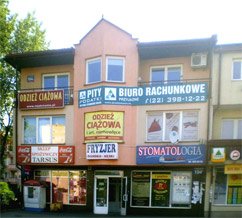


20% Rabatu - przez 3 miesiące za polecenie nas innemu klientowi.
Każdy polecający otrzyma 20% rabat liczony od wartości podpisanego kontraktu z nowym klientem
GRATIS - Założenie jednoosobowej Dzialalności Gospodarczej dla klientów, którzy podpiszą z nami umowę o obsługę księgową !!!


The Surprising Mathematics Behind Candy Rush: Where Factorials and Fractals Spark Playful Patterns
Candy Rush is more than a colorful, fast-paced game—it’s a dynamic playground where mathematics quietly shapes every spin, drop, and cluster. By blending chance, combinatorics, and recursive visual symmetry, it transforms abstract concepts like factorials and fractals into tangible, engaging experiences. Through this lens, players don’t just play—they discover real mathematical principles in action.
Factorials in Candy Rush: The Permutations Behind Every Sequence
At its core, Candy Rush relies on the mathematical idea of factorials: the product of all positive integers up to a number n, written n!. In combinatorics, this quantifies the number of ways to arrange n distinct items. For example, arranging just 7 unique candies in a row yields 7! = 5,040 distinct sequences. This explosion of possibilities reveals how quickly complexity grows with each added candy, directly shaping game strategy and outcome diversity.
This rapid growth illustrates a key insight: small changes multiply exponentially. A 7-candy sequence vs. 8 candies isn’t just an extra—six more permutations emerge from every original position, demonstrating combinatorial scaling. Understanding factorials helps players anticipate variation and appreciate why no two runs are exactly alike.
| Scenario | Calculation | Result |
|---|---|---|
| 7 unique candies | 7! | 5,040 |
| 8 unique candies | 8! | 40,320 |
Fractals and Self-Similarity: Patterns That Repeat Across Scales
Fractals—geometric shapes defined by infinite recursion—introduce a new layer of depth to Candy Rush. Though the game isn’t explicitly fractal in layout, its visual feedback loops mirror fractal principles: candies cluster in repeating, self-similar groups that echo across scales. A tightly packed cluster of candies resembles a smaller version of the whole, reinforcing spatial reasoning through recursive design.
This visual repetition fosters intuitive recognition of patterns, helping players build mental models of probability and distribution. Fractal-like symmetry enhances engagement by grounding abstract ideas in familiar, evolving forms. Such recursive structure turns play into a powerful cognitive exercise.
Variance and Uncertainty: The Role of Independent Randomness
Each candy drop in Candy Rush contributes independently to the final arrangement, governed by probabilistic variance. Mathematically, the variance of a sum of independent random variables equals the sum of their individual variances. In gameplay, this means every drop adds a measurable layer of uncertainty, combining predictability with surprise.
This blend models real-world randomness: while individual drops follow statistical rules, the outcome remains inherently unpredictable. Understanding variance helps players grasp how chance operates—not as blind luck, but as a structured, analyzable force shaping outcomes.
„In Candy Rush, every drop is both a step in a known sequence and a spark of infinite possibility—mirroring how variance and factorials combine to shape both play and reality.”
Designing Playful Patterns: Where Math Meets Experience
The fusion of factorial permutations and fractal-like repetition creates layered depth in Candy Rush. Players intuitively grasp how 7! sequences multiply rapidly, while clustered candy groups reflect fractal self-similarity. This blend enhances cognitive engagement by transforming abstract math into visible, interactive patterns.
This design philosophy turns learning into play: understanding why outcomes explode with each added candy or why clusters repeat isn’t just fun—it’s foundational. The game becomes a canvas where combinatorics and geometry collaborate, making complex ideas accessible and memorable.
Extending Beyond Candy Rush: Real-World Applications of These Concepts
Factorials power not just Candy Rush but also critical domains like game AI scheduling, cryptography, and procedural content generation. Fractals inspire generative art, procedural world-building, and even nature-inspired design systems. These concepts bridge entertainment and innovation, proving math’s relevance beyond the classroom.
- Factorials enable efficient algorithms for dynamic level generation in games and randomized content in apps.
- Fractals drive visual design in digital art and virtual environments, creating infinite detail with minimal code.
- Probabilistic variance models guide decision systems in finance, weather forecasting, and machine learning.
Conclusion: Math as Play, Patterns as Learning
Candy Rush exemplifies how foundational mathematical ideas—factorials, fractals, and probability—come alive through interactive play. Rather than abstract theory, it offers a vibrant, hands-on experience where combinatorics, recursion, and randomness merge seamlessly. This fusion turns learning inevitable and vivid, inviting players to explore deeper structures through joy and curiosity.
Where math sparks wonder, patterns become teachers. In Candy Rush’s colorful chaos, every candy drop tells a story of permutations and repetition—reminding us that the beauty of numbers is not hidden, but waiting to be discovered.
Galeria
