


|


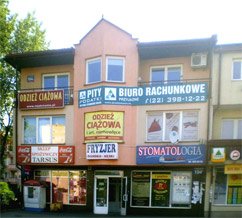


20% Rabatu - przez 3 miesiące za polecenie nas innemu klientowi.
Każdy polecający otrzyma 20% rabat liczony od wartości podpisanego kontraktu z nowym klientem
GRATIS - Założenie jednoosobowej Dzialalności Gospodarczej dla klientów, którzy podpiszą z nami umowę o obsługę księgową !!!


The Quantum Edge in Uncertainty: From Physics to Practice
Uncertainty is not merely a limitation—it is a fundamental feature of nature and measurement. From the quantum realm to macroscopic systems, probabilistic behavior governs outcomes we observe and predict. This article explores how quantum and statistical uncertainty shape scientific inquiry, grounded in foundational laws like Wien’s displacement law and the stochastic power of Monte Carlo integration. At the intersection of theory and technology stands Chicken Road Gold—a modern metaphor illustrating uncertainty through layered quantum states and probabilistic emission modeling, enhanced by statistical sampling techniques that embody its inherent randomness.
Foundations of Uncertainty: Quantum and Statistical Limits
Uncertainty arises both from quantum mechanics and statistical sampling. In quantum physics, Heisenberg’s uncertainty principle establishes limits on simultaneously knowing complementary variables like position and momentum, reflecting a profound indeterminacy at the smallest scales. Equally critical is statistical uncertainty, where repeated measurements converge toward true values only within an error margin proportional to the inverse square root of sample size, described by the convergence rate O(1/√n). These principles define the boundaries of predictability in science and engineering.
| Concept | Wien’s displacement law | Peak emission wavelength λ_max ∝ 1/T; hotter objects emit shorter wavelengths |
|---|---|---|
| Monte Carlo integration | Error scales as O(1/√n); random sampling refines accuracy | |
| Half-life decay | Exponential N(t) = N₀e^(-λt), λ = ln(2)/t₁/₂ |
Wien’s Law and the Quantum Signature of Thermal Radiation
Wien’s displacement law reveals a precise quantum signature: λ_max = 2.898×10⁻³ / T, where T is thermodynamic temperature in kelvin. This inverse relationship means hotter bodies emit peak radiation at shorter wavelengths—visible in everyday thermal imaging, from infrared cameras detecting living beings to astronomers estimating stellar surface temperatures. The law exemplifies how fundamental constants encode deep physical truths, translating abstract temperature into measurable light signatures.
«The peak emission shifts with temperature, a fingerprint of quantum states governed by statistical distributions.»
— Insight from thermal radiation physics
Monte Carlo Integration and the Embodiment of Uncertainty
Monte Carlo methods harness randomness to approximate complex integrals and model inherently uncertain systems. Their error scales as O(1/√n), meaning doubling sample size halves the uncertainty—a powerful analogy for how statistical convergence embodies uncertainty in computation. In quantum systems, such methods simulate electron distributions or quantum state decays, while in finance, they model risk under volatile conditions. This computational edge transforms uncertainty from a barrier into a navigable parameter.
“Uncertainty is not noise; it’s the structure of what we cannot yet resolve.”
Chicken Road Gold: A Modern Metaphor for Quantum and Statistical Uncertainty
Chicken Road Gold serves as a dynamic metaphor for uncertainty in both quantum and statistical domains. Imagine a layered digital landscape where each layer represents a quantum state with probabilistic emission patterns modeled by Wien’s law. Random sampling—guided by Monte Carlo principles—simulates how emission spectra emerge not as single values but as distributions shaped by statistical convergence. This platform visualizes uncertainty not as chaos, but as structured randomness, where predictable decay curves mask underlying probabilistic collapse, echoing quantum measurement dynamics.
From Atomic Decay to Quantum Edge: The Half-Life as Uncertainty Decay
Carbon-14 decay exemplifies exponential uncertainty: N(t) = N₀e^(-λt), where decay constant λ = ln(2)/t₁/₂. Though the process is deterministic at the particle level, macroscopic predictions rely on probabilistic confidence intervals that widen with time. This mirrors quantum measurement, where particle states evolve toward probabilistic outcomes over time—partial collapse, evolving confidence, and inherent unpredictability. Chicken Road Gold visualizes this decay process as a stochastic timeline, reinforcing how uncertainty “decays” not away, but deepens into wider intervals of belief.
Designing Uncertainty-Aware Systems Inspired by Chicken Road Gold
Building systems that thrive amid uncertainty demands integrating physical principles with computational methods. Key strategies include adaptive sampling—refining data collection where variance is high—and probabilistic interfaces that communicate confidence levels transparently. O(1/√n) error scaling informs optimal resource allocation, ensuring precision without excessive cost. These practices are vital in quantum sensing, AI model training, and real-time risk modeling, where uncertainty management drives robustness and trust.
Broader Implications: AI, Sensing, and Scientific Discovery at the Quantum Edge
At the frontier of AI and quantum computing, uncertainty is not a flaw but a frontier. Machine learning models trained on noisy data leverage Monte Carlo dropout and Bayesian inference to quantify prediction uncertainty. Quantum sensors exploit superposition and entanglement to surpass classical noise limits, probing phenomena once hidden by uncertainty. Chicken Road Gold encapsulates this evolution: uncertainty as guide, not obstacle. From atomic decay to quantum edge, understanding and harnessing uncertainty unlocks transformative innovation.
Summary Table: Uncertainty Principles in Practice
| Domain | Uncertainty Mechanism | Key Principle | Application Example |
|---|---|---|---|
| Thermal Imaging | Statistical sampling error | Wien’s law for temperature estimation | Infrared cameras, stellar spectroscopy |
| Quantum Systems | Probabilistic state collapse | Monte Carlo simulation | Quantum state tomography, risk modeling |
| Carbon-14 Decay | Exponential probabilistic decay | λ = ln(2)/t₁/₂ | Radiocarbon dating, archaeological analysis |
| AI and Machine Learning | Model confidence and generalization | Bayesian inference, Monte Carlo dropout | Robust AI under noisy data |
Galeria
